 PRO
PRO
Object Oriented Programming in Java
Java Programming with Object Oriented Design & Application
Learn the basics of object-oriented programming in Java, from basics like creating classes and objects, to exploring the concepts like encapsulation, inheritance, and polymorphism to create structured applications.
Build skills and get job ready
Skill prep
Job prep

50+ Guided Projects

AI Resume Builder

AI Mock Interviews
About this course
This object oriented programming Java course provides the essential skills needed to build structured, reusable Java applications using Object-Oriented Programming (OOP). You will learn how to design applications with core OOP principles such as encapsulation, inheritance, and polymorphism. The course will also help you understand how to efficiently manage data using arrays, ArrayLists, and the Collections Framework.
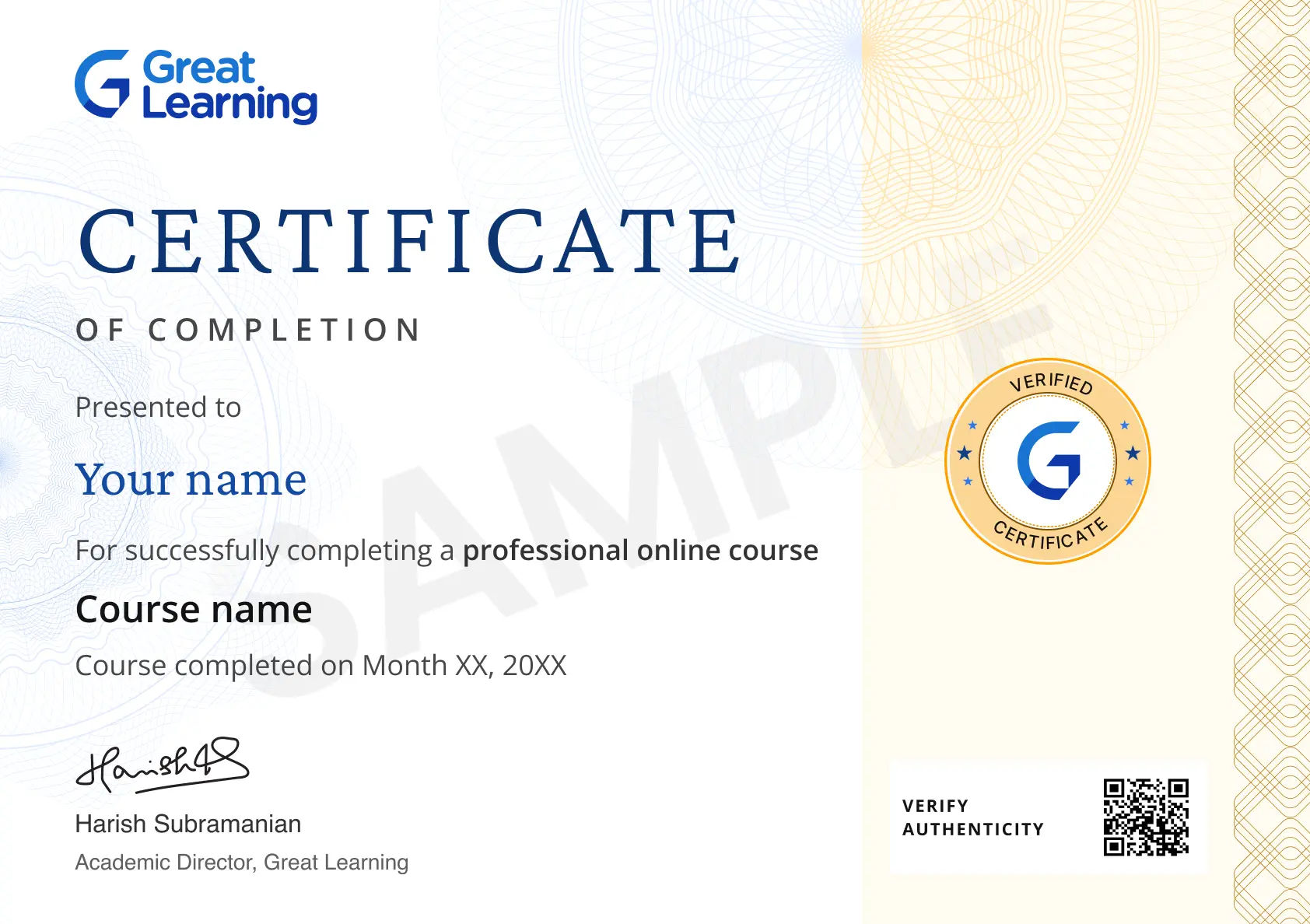
Earn a certificate with an Academy Pro+ subscription
Subscribe To Pro+ • $29/Month

Stand out to recruiters
Share on professional channels
Globally recognised
Land your dream job
Course outline
Industry focussed curriculum designed by experts
Introduction to Object-Oriented Programming
8 items
1.53 hr
- Introduction to Arrays (M)
- Initializing and Accessing Arrays
- Knowledge Check - Introduction to Arrays
- Iterating Through Arrays
- Common Array Algorithms (min/max, average) (M)
- Knowledge Check - Common Array Algorithms (min/max, average)
- Introduction to ArrayList
- Adding, Removing, and Accessing ArrayList Elements
- Knowledge Check - Adding, Removing, and Accessing ArrayList Elements
- Comparing Arrays vs. ArrayLists
- Knowledge Check - Comparing Arrays vs. ArrayLists
- Basic Concepts of Collections Framework (M)
- Mini Project: Student Grade Analyzer / To-Do List Manager
Working with Arrays and ArrayLists
8 items
1.40 hr
- What is OOP? Concepts Overview
- Creating your First Class (M)
- Knowledge Check - Creating Your First Class
- Creating and Using Objects
- Constructors - Default and Parameterized (M)
- Knowledge Check - Constructors - Default and Parameterized
- this Keyword and Constructor Overloading
- Encapsulation and Access Modifiers
- Getters and Setters (M)
- Knowledge Check - Getters and Setters
- Static vs Instance Fields and Methods
Abstraction, Inheritance and Polymorphism
7 items
2 hr
- Inheritance in Java – extends Keyword (M)
- Overriding Methods and super Keyword
- Knowledge Check - Inheritance in Java – extends Keyword
- Polymorphism - Object Behavior by Reference Type
- Interfaces in Java - Definition and Usage (M)
- Knowledge Check - Interfaces in Java - Definition and Usage
- Implementing Multiple Interfaces
- Abstract Classes and Methods (M)
- Knowledge Check - Abstract Classes and Methods
- Composition vs Inheritance
Get access to the complete curriculum with your free trial
Start 7-Day Free TrialGuided Projects
Solve real-world projects with this object oriented programming in Java with a step-by-step guide, starter code templates, and access to model solutions to boost your skills and build a standout resume.
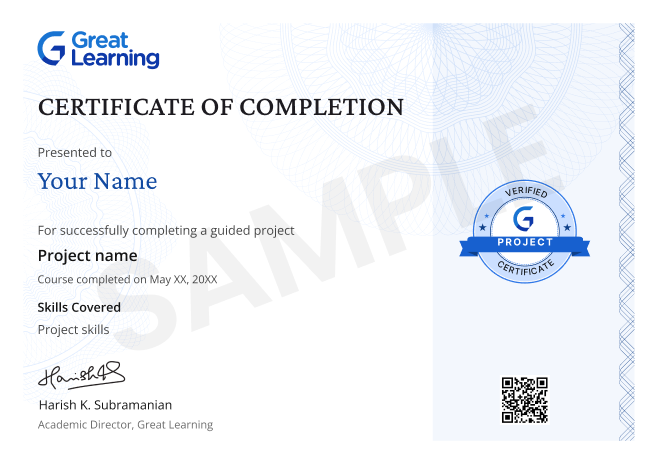
Get a project certificate to add to your resume
Earn a certificate for every project you complete.
- GUIDED PROJECT 1
- Console-Based Employee Payroll & Directory System
- In this project, you will build a Java console application that maintains an employee directory and calculates payroll. The program will allow the user (HR/admin) to add employees of different types (Full-Time, Part-Time, Intern), view/search/remove employees, and generate payroll reports such as total payroll cost, highest/lowest pay, and average pay. The design will intentionally use Object-Oriented Programming concepts: encapsulation (private fields + getters/setters), constructors and constructor overloading, inheritance, method overriding, polymorphism (processing employees using a common reference type), and basic collection handling using arrays and ArrayList.
Gain skills & build your resume with complete access to guided projects in your free trial
Start 7-Day Free TrialOur Learners Experience

Frequently Asked Questions
What will I learn in this Object Oriented Programming in Java course?
In this Object Oriented Programming in Java course, you'll learn the foundational concepts of OOP, including classes, objects, inheritance, polymorphism, and encapsulation. The course also covers advanced topics like working with arrays and ArrayLists and implementing Java's Collections Framework.
Is this course the best Java OOP course for beginners?
Yes, this Java OOP course is designed for beginners. You’ll start with the basics of Java and Object Oriented Programming Java concepts, and gradually progress to more complex topics like inheritance and polymorphism, all while learning how to apply these concepts through practical examples.
Who should enroll in this Java OOP course?
This Object Oriented Programming Java course is ideal for those new to programming or developers looking to learn Object Oriented Programming in Java. Whether you're starting from scratch or refining your Java skills, this course will provide you with a solid foundation in OOP principles.
What key skills will I gain from this learn OOP Java course?
By completing this course, you’ll gain skills in:
Object-Oriented Programming Concepts
Java Class Design and Inheritance
Data Structures with Arrays and ArrayLists
Code Reusability
Polymorphism.
How long does it take to complete this Object Oriented Programming Java online course?
The course takes 5.33 hours to complete. Since it is self-paced, you can learn at your own speed, making it flexible for those with other commitments.
Will I be able to build real-world applications after completing this Java OOP course?
Yes, after completing this course, you'll have the skills to build real-world Java applications. The hands-on project, where you create a console-based employee payroll and directory system, will help you apply OOP principles in a practical context.
How will this Java OOP course help me with data management in Java?
The course teaches you how to work with arrays and ArrayLists, key data structures in Java. You'll learn how to initialize them, add/remove elements, and efficiently manage and manipulate data, which is crucial for real-world programming tasks.
Is this course suitable for someone with no prior Java experience?
Yes, this Learn Object-Oriented Programming in Java course is designed for beginners. It covers basic programming concepts before moving to more complex topics, making it ideal for individuals with little to no prior experience in Java.
How does this course cover OOP concepts like inheritance and polymorphism?
In this Java Object Oriented Programming course, you’ll learn how inheritance allows classes to inherit properties and methods from other classes, and how polymorphism lets you use objects of different classes in a common interface. You'll apply these concepts in hands-on projects to reinforce your understanding.
What is encapsulation, and how does this course teach it?
Encapsulation is the concept of bundling data (fields) and methods that operate on that data within a single class, while restricting access to some of the object's components. This course covers encapsulation using private fields and getter/setter methods.
What is the guided project in this Object Oriented Programming Java course?
In this course, you will complete a guided project where you build a console-based Employee Payroll & Directory System. This project will require you to apply OOP concepts such as encapsulation, inheritance, and polymorphism, giving you hands-on experience developing real-world Java applications
How will this course help me in my career as a Java developer?
This course will equip you with the foundational Java skills required for a career in software development. Understanding OOP principles is crucial for Java developers, and the hands-on project will help you build scalable, maintainable applications, making you more competitive in the job market.
Will I be able to use what I learn in this course in other programming languages?
Yes, the core principles of OOP are transferable across different programming languages. By learning Object Oriented Programming in Java, you’ll gain valuable skills that can be applied to other languages that support OOP, such as C++, Python, and C#.
What are the benefits of learning OOP in Java?
Learning OOP in Java allows you to write reusable, modular code that is easier to maintain and debug. It helps build large, scalable applications and is a fundamental skill in software development in Java and other object-oriented languages.
Subscribe to Academy Pro+
Build skills and prepare for jobs with access to 500+ courses, certificates and tools.
Subscribe To Pro+ • $29/Month
Skill Prep
Build skills with courses, practice with tools and earn certificates.

500+ courses

500+ Coding Exercises

Microsoft & AWS certificates

Job Prep
Work on industry-relevant scenarios, build professional resumes & prepare for jobs with mock interviews
50+ Guided Projects
AI Resume Builder
AI Mock Interviews
Application-driven learning to
Become a Skilled Professional with Pro Courses
Gain work-ready skills with guided projects, top faculty and AI tools, all at an affordable price.








.jpg)

.png)


.png)










.png)
 (1).jpg)

.png)

.png)
.png)
.png)
.png)
.png)
.png)


.png)
.png)
.png)



.png)
 (1).png)



.png)
.png)
.png)


.jpg)
.png)
.png)
.png)


.png)

.png)
.jpg)

.jpg)
.jpg)
.jpeg)
.png)
.jpg)
.jpg)
.png)