Free Email Marketing Course with Certificate
Email Marketing
 4.5
Beginner level
2.25 learning hrs
4.5
Beginner level
2.25 learning hrs
Join this free email marketing course and learn how to build excellent email marketing strategies, write clear and concise emails, and test, deliver, and report emails. Learn how to create a communication plan that resonates.




About this course
This email marketing course will provide insights on what email marketing means, how to set up an email marketing strategy, and how to construct, test, deliver and report emails in the best possible way. The course talks about the user journey and why it is essential to understand your audience to better use email marketing. Not sure which subject lines work best? The free email marketing course will teach you which words to avoid using in your subject lines to improve your email open rates and also provide tips and tricks. In addition, you will gain hands-on learning experience using Mailchimp services.
Are you ready to step into the vast world of digital marketing? Look no further! Our professional digital marketing courses cover all aspects of digital marketing required to become an expert in the domain.
Course outline
What is Email Marketing?
Email marketing is a form of direct marketing that uses electronic mail as a means of communicating commercial or fundraising messages to an audience. In its broadest sense, every email sent to a potential or current customer could be considered email marketing.
How to build an effective Email Marketing strategy?
Building an effective marketing strategy requires you to keep a few points in mind. This module will help you learn how to build an effective email marketing strategy.
Customer journey
There are different stages in the customer journey where a customer may move from being a visitor to making a purchase. This module talks more about the customer journey and why it is important to understand the same.
Words to be avoided for subject lines
Are you writing email subject lines that don’t convert? Here is a list of words that should be avoided while creating a subject line that resonates with your audience.
Construct, testing, delivery and reporting of email
In this section of the email marketing course, you will gain hands-on learning experience and learn more about how to construct, test, deliver and report emails using the email marketing service, Mailchimp.
Tips and Tricks for Email Marketing
This section will provide you with a few tips and tricks that will enable you to create the best email marketing strategy for your audience and get the most out of the email campaigns.
Get access to the complete curriculum once you enroll in the course
 4.5
4.5
Level up with advanced skills & become job ready with Pro+
Subscribe to Pro+ today to build skills with 50+ Pro courses and prep for jobs with advanced AI tools.
 PRO
PRO
 (1).jpg)

Practice exercises
Guided Projects
AI Resume Builder
AI mock interviews






 India
India

 Nigeria
 India
India
 India
India


 India
India

 Mexico

 India
India
What our learners enjoyed the most
Skill & tools
60% of learners found all the desired skills & tools
Frequently Asked Questions
Will I receive a certificate upon completing this free course?
Is this course free?
What are the prerequisites required to learn this email marketing course?
There are no prerequisites to learn email marketing. If you are a beginner who is interested in this course, you can enroll for free and start learning.
How long does it take to complete this free email marketing course?
The email marketing course has 1.5 hours of video content that you can access and study at your own convenience and pace.
Will I have lifetime access to the free course?
Once you enroll in the free email marketing course, you will have lifetime access to it. You can study at your own pace.
What are my next learning options after this email marketing course?
Once you complete this course, you can opt for Great Learning’s postgraduate digital marketing courses that will help you advance your career and learn digital marketing comprehensively.
Is it worth learning email marketing?
Most business communications can be done over emails. Be it new product launches, discounts, or upcoming events, you have the option to reach a wider audience through email marketing. Yes. It is worth learning email marketing.
What is email marketing used for?
An effective communication method for promoting the goods and services offered by your company. Email marketing can assist in informing customers of new products, offers, and more.
Why is email marketing so popular?
With the help of email marketing, we can build a relationship with our past customers and also generate new leads. It gives us an opportunity to communicate directly with them. With the help of personalized email, we have the opportunity to create an impactful communication channel.
What jobs demand that you learn email marketing?
Email marketing is helpful for advertisers to share business requests, charity-related information, new product launches, sales or promotional messages, newsletters, and so much more. Thus, email marketing is not limited to one job. No matter which industry you are in, healthcare, education, entertainment, or finance, using email marketing can prove to be beneficial to your business.
Will I get a certificate after completing this email marketing course?
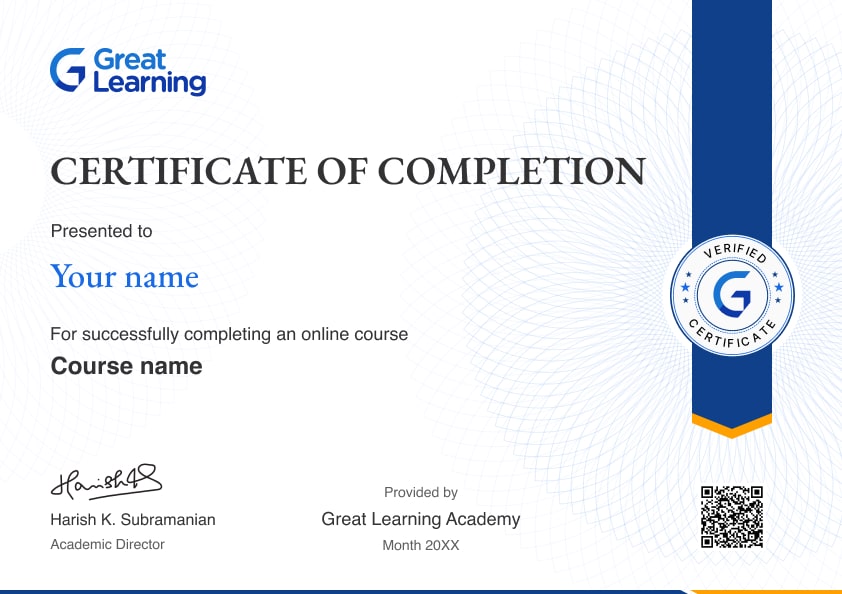
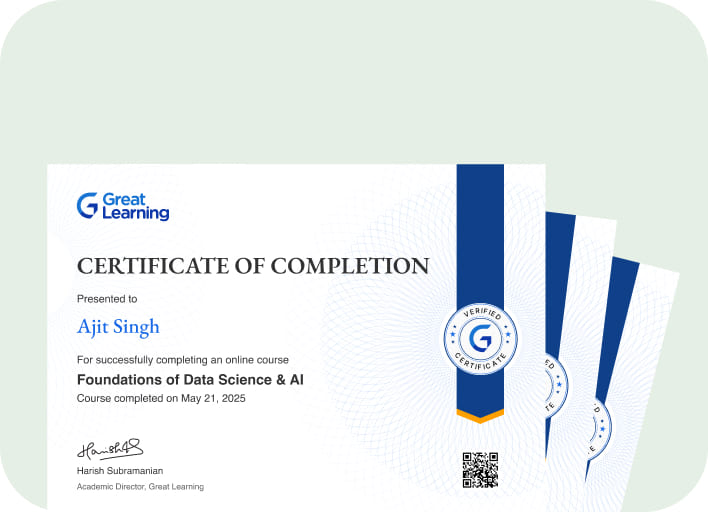
After successfully completing all the modules, followed by a quiz or assignment, you will receive a free online course completion certificate. A certificate will be available in your dashboard within 24 hours of completing the required quiz or assignment.
What knowledge and skills will I gain upon completing this email marketing course?
Through this email marketing course, you will be able to learn about email marketing strategies, customer journey, how to write a good email subject line, tips, and tricks, and also gain hands-on experience with the email automation tool, Mailchimp.
How much does this email marketing course cost?
This email marketing course offered by Great Learning Academy is completely free of cost. Anyone who is interested in learning the foundations of email marketing can get started with this course.
Is there a limit on how many times I can take this email marketing course?
There is no limit to how many you can take the course. You can learn at your own pace and convenience. The course will be available to you once you sign up.
Can I sign up for multiple courses from Great Learning Academy at the same time?
You can sign up for multiple courses from Great Learning Academy at the same time if you are interested.
Why choose Great Learning Academy for this email marketing course?
A global ed-tech platform dedicated to providing comprehensive knowledge to professionals, Great Learning has come up with an initiative that offers free online courses on in-demand skills to help individuals advance their career and skills. Great Learning Academy offers free courses in multiple domains and also offers a course completion certificate that adds value to the resume. More than 4 million learners from 140 countries have benefited from Great Learning Academy’s free online courses with certificates.
Who is eligible to take this email marketing course?
There are no eligibility criteria. Any individual who is interested in learning email marketing is eligible to take up this free email marketing course.
What are the steps to enroll in this course?
To enroll in this free online email marketing course, follow these steps:
- Click on the “ENROLL FOR FREE” button that appears at the top of the page
- Create an account by filling in the required information
Once you’re enrolled in the course, you will gain access to all the learning material
Become a Skilled Professional with Pro Courses
Gain work-ready skills with guided projects, top faculty and AI tools, all at an affordable price.









.jpg)



.png)
.jpg)

.jpg)
.png)

.png)





.png)

.png)
.jpg)
.jpg)

.png)
.png)
.png)

.png)
.png)
.png)


.png)
.png)
.png)
.png)
.png)



.png)
.jpeg)
.jpg)

.png)
.png)

.png)
.png)


.png)
.png)
.png)
.jpg)


.png)



 (1).png)


Recommended Free Digital Marketing courses
 FREE
FREE
.png) FREE
FREE
 FREE
FREE
 FREE
FREE

Similar courses you might like
FREE
 FREE
FREE
 FREE
FREE
 FREE
FREE
Related Digital Marketing Courses

-

Great Lakes Executive Learning
PGP in Strategic Digital Marketing6 Months · Online · Weekend
Dedicated Career SupportKnow More
-
FOM University
Master of Business Administration (MBA)18 Months · Study in Germany
No GRE/GMAT requiredKnow More




Relevant Career Paths >



Other Digital Marketing tutorials for you
Email Marketing
Email marketing is a powerful digital marketing strategy that involves sending targeted messages and promotional content to a group of individuals through email. It has proven to be an effective method for businesses to engage with their audience, build relationships, and drive conversions. In this article, we will explore the key aspects of email marketing and its benefits in today's digital landscape.
One of the major advantages of email marketing is its ability to reach a wide audience. With billions of people using email worldwide, businesses can tap into this vast network to connect with potential customers. Additionally, email marketing allows for precise targeting and segmentation, enabling companies to tailor their messages to specific groups based on demographics, interests, and past interactions. This personalized approach increases the likelihood of engagement and conversion, as recipients receive content that resonates with their needs and preferences.
Furthermore, email marketing is highly cost-effective compared to other marketing channels. Traditional advertising methods such as print or television ads can be expensive and have limited reach. On the other hand, email campaigns can be created and executed at a fraction of the cost, making it accessible to businesses of all sizes. By investing in an email marketing platform or service, companies can automate their campaigns, saving time and resources while maximizing their reach and impact.
Another significant benefit of email marketing is its measurability and trackability. Email marketing platforms provide detailed analytics that allow businesses to monitor the performance of their campaigns in real-time. Metrics such as open rates, click-through rates, and conversion rates provide valuable insights into the effectiveness of the email content, subject lines, and call-to-actions. By analyzing this data, companies can refine their strategies, optimize their campaigns, and achieve higher engagement and conversion rates over time.
Moreover, email marketing facilitates building and nurturing customer relationships. By consistently delivering valuable and relevant content, businesses can establish trust and credibility with their audience. Email newsletters, product updates, and personalized recommendations can keep customers informed and engaged, fostering loyalty and repeat business. Additionally, email automation enables companies to create customized customer journeys, sending targeted messages based on specific actions or milestones, such as abandoned cart reminders or post-purchase follow-ups.
However, it is essential to note that successful email marketing relies on obtaining the consent of recipients and adhering to privacy regulations, such as the General Data Protection Regulation (GDPR) and the CAN-SPAM Act. Obtaining permission through opt-in forms and providing easy unsubscribe options are crucial for maintaining a positive sender reputation and ensuring compliance.
In conclusion, email marketing remains a valuable and effective strategy for businesses to engage with their audience and drive conversions. Through precise targeting, cost-effectiveness, measurability, and the ability to build relationships, email campaigns can deliver personalized and relevant content that resonates with recipients. By utilizing email marketing best practices and complying with privacy regulations, businesses can leverage this powerful tool to achieve their marketing goals in today's digital landscape.