Free Basics of E-Marketing Course with Certificate
Fundamentals of E-Marketing
 4.58
Beginner level
3.0 learning hrs
4.58
Beginner level
3.0 learning hrs
Enrol for this free E-Marketing course to master digital marketing, consumer insights, e-marketing tools, and SEO. Start your E-marketing journey today!
Instructor:
Madhur Singh




About this course
This free e-marketing course begins by providing an overview of online marketing principles. The second module, "Understanding the Digital Consumer," delves into consumer behavior in the digital realm. "E-Marketing Mix" discusses strategies for effectively blending various marketing elements. "Key E-Marketing Tools and Platforms" explores essential digital tools and platforms for effective marketing. Finally, "Content Marketing and SEO" teaches techniques to enhance online visibility and audience engagement. This course is ideal for anyone looking to gain foundational knowledge in e-marketing.
Ready to take your Digital Marketing knowledge to the next level? Check out our Postgraduate Program in Strategic Digital Marketing and turn your passion into a profession.
Course outline
Introduction to E-Marketing
An overview of electronic marketing strategies, principles, and applications in the digital landscape.
Understanding the Digital Consumer
Exploring consumer behavior in the online realm and the factors influencing digital purchasing decisions.
E-Marketing Mix
Examining the essential elements of the digital marketing mix, including product, price, place, and promotion, tailored for the online environment.
Key E-Marketing Tools and Platforms
An exploration of fundamental tools and platforms used in electronic marketing to engage with audiences, analyze data, and optimize campaigns.
Content Marketing and SEO
Understanding the significance of content marketing and search engine optimization (SEO) in enhancing online visibility and driving organic traffic.
Get access to the complete curriculum once you enroll in the course
 4.58
4.58






 India
India


 France
Our course instructor

Madhur Singh
Career Growth Expert
Management Expert


Frequently Asked Questions
Will I receive a certificate upon completing this free course?
Is this course free?
What prerequisites are required to enrol in this E-marketing course?
You do not need any prior knowledge to enrol in this E-marketing course.
How long does it take to complete this E-marketing course?
It is a 1.0 hour long course, but it is self-paced. Once you enrol, you can take your own time to complete the course.
Will I have lifetime access to the free course?
Yes, once you enrol in the course, you will have lifetime access to any of the Great Learning Academy’s free courses. You can log in and learn whenever you want to.
Will I get a certificate after completing this E-marketing course?
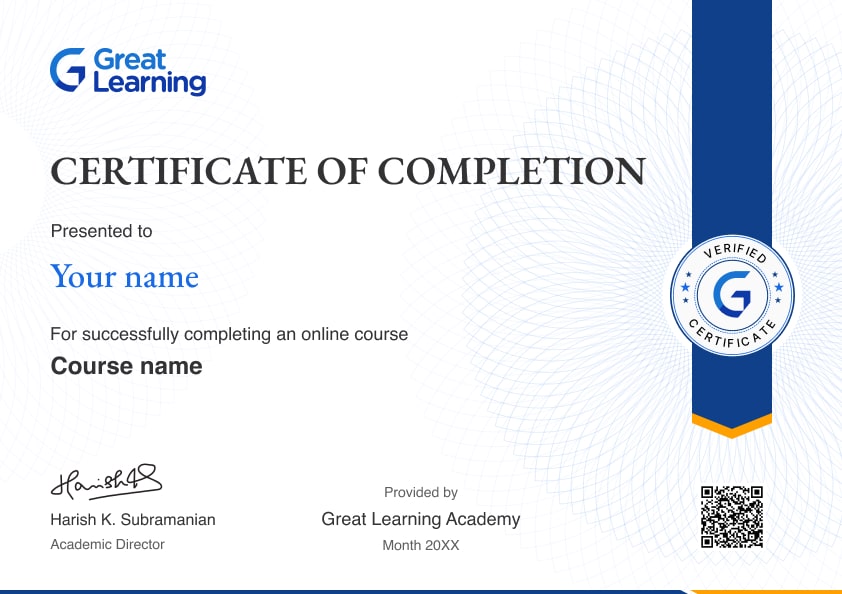
Yes, you will get a certificate of completion after completing all the modules and cracking the assessment.
How much does this E-marketing course cost?
It is an entirely free course from Great Learning Academy.
Is there any limit on how many times I can take this free course?
No. There is no limit. Once you enrol in the E-marketing course, you have lifetime access to it. So, you can log in anytime and learn it for free online.
Who is eligible to take this E-marketing course?
You do not need any prerequisites to take the course, so enroll today and learn it for free online.
Become a Skilled Professional with Pro Courses
Gain work-ready skills with guided projects, top faculty and AI tools, all at an affordable price.
 PRO
PRO







.jpg)
.png)


.jpeg)

.png)
.png)
.jpg)
.png)
.png)
.png)
.png)
.png)
.png)
.png)


.png)
.png)
.png)
.png)
.png)
.jpg)
.jpg)
.png)
.png)
.png)
.png)
.jpg)


.png)
.png)
.jpg)
 (1).jpg)
.png)
.jpg)


.png)

 (1).png)



.png)
.png)
Recommended Free Management courses
 FREE
FREE
 FREE
FREE
 FREE
FREE
 FREE
FREE
Similar courses you might like
FREE
FREE
 FREE
FREE
 FREE
FREE

Related Management Courses

-

Great Lakes Executive Learning
PGP in Strategic Digital Marketing6 Months · Online · Weekend
Dedicated Career SupportKnow More
-
FOM University
Master of Business Administration (MBA)18 Months · Study in Germany
No GRE/GMAT requiredKnow More



Relevant Career Paths >



Fundamentals of E-Marketing
E-marketing, also known as electronic marketing or digital marketing, is a dynamic and evolving field that encompasses a wide range of online strategies and tactics aimed at promoting products, services, or brands to a global audience through the internet. It has revolutionized the way businesses connect with consumers and has become an essential component of any successful marketing strategy in the digital age.
E-marketing leverages various online channels and platforms to reach and engage with potential customers. Some of the key components of e-marketing include:
- Website Marketing: A company's website serves as its virtual storefront in the online world. It's a hub for all e-marketing activities, providing essential information about products or services, engaging content, and opportunities for customers to make purchases or inquiries.
- Search Engine Optimization (SEO): SEO is the process of optimizing a website's content and structure to improve its visibility on search engines like Google. High search engine rankings drive organic (unpaid) traffic to a website, making it easier for potential customers to find a business.
- Content Marketing: Content marketing involves creating and distributing valuable, relevant content to attract and retain a target audience. This content can take the form of blog posts, articles, videos, infographics, and more. Content marketing establishes a business as an authority in its industry and builds trust with consumers.
- Email Marketing: Email remains a powerful tool in e-marketing. It allows businesses to reach their audience directly with personalized messages, promotions, and updates. Effective email marketing campaigns can nurture leads and drive conversions.
- Social Media Marketing: Social media platforms like Facebook, Instagram, Twitter, and LinkedIn provide businesses with opportunities to engage with their audience, share content, and run targeted advertising campaigns. Social media marketing is essential for building brand awareness and fostering customer loyalty.
- Pay-Per-Click Advertising (PPC): PPC advertising involves paying for clicks on ads displayed on search engines or social media platforms. It provides instant visibility and can drive traffic to a website quickly. Platforms like Google Ads and Facebook Ads offer robust PPC advertising options.
- Affiliate Marketing: This strategy involves partnering with affiliates or influencers who promote a business's products or services in exchange for a commission on sales generated through their referral links. It's a cost-effective way to expand reach and tap into niche audiences.
- Online Advertising: Beyond PPC and affiliate marketing, businesses can utilize various online advertising formats, such as display ads, video ads, and native ads, to reach their target audience on websites, apps, and other digital platforms.
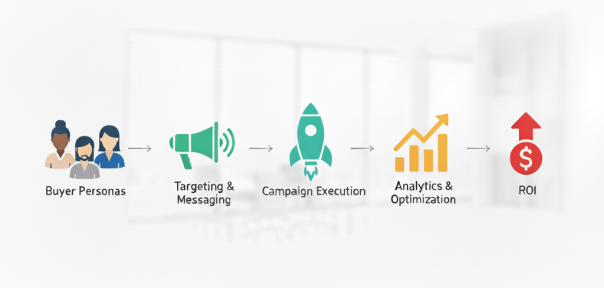
- Analytics and Data Analysis: E-marketing relies heavily on data and analytics tools to track the performance of campaigns and gain insights into consumer behavior. This data-driven approach allows businesses to refine their strategies for better results.
- Mobile Marketing: With the proliferation of smartphones and mobile apps, businesses must optimize their e-marketing efforts for mobile devices. Mobile marketing includes tactics like mobile-responsive website design, SMS marketing, and in-app advertising.
E-marketing offers several advantages over traditional marketing methods:
- Global Reach: E-marketing enables businesses to reach a global audience, breaking down geographical barriers.
- Cost-Effectiveness: Many digital marketing strategies are more cost-effective than traditional advertising methods, offering a higher return on investment.
- Targeted Advertising: E-marketing allows for precise targeting based on demographics, interests, and behaviors, ensuring that messages reach the most relevant audience.
- Real-Time Feedback: Digital marketing provides real-time data on campaign performance, allowing businesses to make immediate adjustments for better results.
- Personalization: E-marketing allows for personalized communication with customers, enhancing the customer experience and increasing the likelihood of conversions.
However, e-marketing also comes with challenges, such as staying up-to-date with rapidly evolving technologies and navigating the complexities of online advertising platforms.
In conclusion, e-marketing has transformed the way businesses connect with their audience, offering a multitude of tools and strategies to reach, engage, and convert customers online. To succeed in the digital age, businesses must embrace e-marketing and adapt their strategies to the ever-changing landscape of the internet. Effective e-marketing requires a combination of creativity, data analysis, and a deep understanding of consumer behavior to achieve meaningful results and stay competitive in the digital marketplace.