
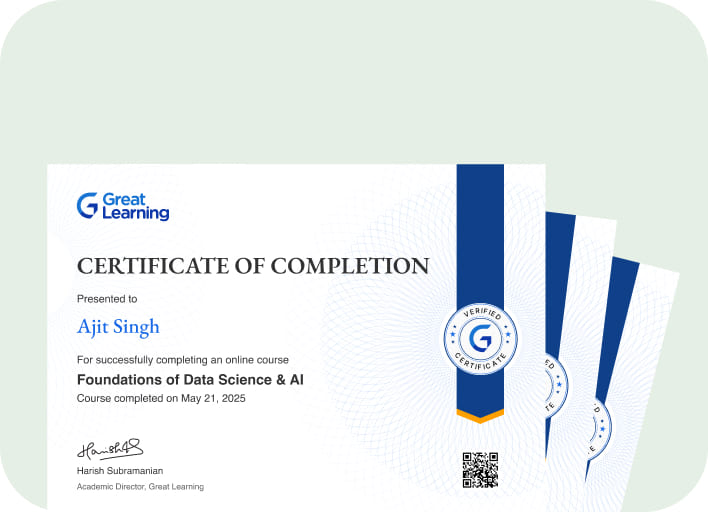
Earn a certificate & get recognized
Agile for Beginners
 4.42
Beginner level
2.25 learning hrs
4.42
Beginner level
2.25 learning hrs
Enroll in this Agile course to learn from basics from our experts. Improve your knowledge on Agile methodology, Basics of SDLC and more. Start today and upgrade your skills to the next level!




About this course
This course covers Agile methodology and its differences from traditional software development approaches. We will cover types of Software Development Life Cycle (SDLC) and steps in each stage. We'll compare Waterfall and Agile methodologies, highlighting how Agile methodology can help teams deliver high-quality software faster and more efficiently.
We'll also introduce you to the key principles of Agile, including iterative development, customer collaboration, communication, and continuous improvement. This course is perfect for anyone who wants to learn about Agile methodology and its benefits. Whether you are a beginner or have experience in software development, you'll gain a solid understanding of Agile methodology and be able to apply Agile principles in your own software development projects. Join us on this exciting journey to transform the way you approach software development!
Course outline
Get access to the complete curriculum once you enroll in the course
 4.42
4.42






 India
India
 India
India
 India
India
 India
India
 India
India
 India
India

 Netherlands
 India
India
 India
India
 India
India
Frequently Asked Questions
Will I receive a certificate upon completing this free course?
Is this course free?
What are the prerequisites required to learn Agile Course course?
You do not need any prior knowledge except knowing what Agile is to learn this Agile Course course.
How long does it take to complete this free Agile Course course?
Agile Course is a 1 hour long course but it is self-paced. Once you enroll, you can take your own time to complete the course.
Will I have lifetime access to the free course?
Yes, once you enroll in the course, you will have lifetime access to any of the Great Learning Academy’s free courses. You can login and learn whenever you want to.
Is it worth learning Agile Course?
Yes, it is 100% yielding to learn this Agile for Beginners Course. The subject focuses on catering the best base for you to kick start your journey in the field by giving you knowledge on everything you need to know.
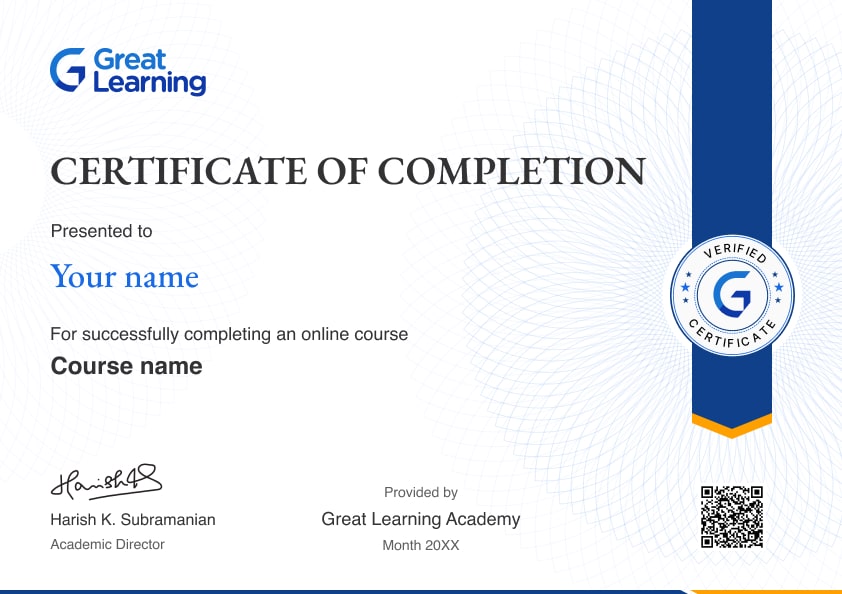
Will I get a certificate after completing this Agile Course free course?
Yes, you will get a certificate of completion after completing all the modules and cracking the assessment.
How much does this Agile For Beginners Course course cost?
It is an entirely free course from Great Learning Academy. Anyone interested in learning Agile Course can start this course.
Is there any limit on how many times I can take this free course?
Once you enroll in the Introduction to Agile Course course, you have lifetime access to it. So, you can log in anytime and learn it for free online.
Become a Skilled Professional with Pro Courses
Gain work-ready skills with guided projects, top faculty and AI tools, all at an affordable price.
 PRO
PRO







 (1).jpg)
.jpg)




.png)
.png)
.png)


.png)
.jpg)

.jpg)
.png)
.jpg)
.jpeg)







.png)
.png)
.png)
.png)
.png)
.jpg)
.jpg)
.png)

.png)
.png)


 (1).png)

.jpg)
.png)
.png)
.png)
.png)

.png)


.png)
.png)
.png)
.png)

.png)
.png)

.png)



Recommended Free Software courses
 FREE
FREE

 FREE
FREE
 FREE
FREE
 FREE
FREE

Similar courses you might like
FREE
 FREE
FREE
 FREE
FREE
 FREE
FREE

Relevant Career Paths >


Other IT & Software tutorials for you
Agile for Beginners
Agile methodology is a modern approach to software development that emphasizes flexibility, customer satisfaction, collaboration, and continuous improvement. It was first introduced in 2001 through the Agile Manifesto, a set of guiding principles for software development. The Agile Manifesto emphasizes the importance of individuals and interactions, working software, customer collaboration, and responding to change.
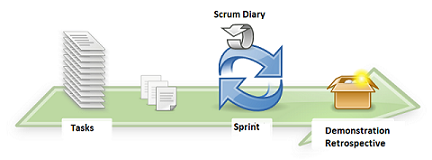
Agile methodology is based on an iterative and incremental approach to development. Rather than completing a project in a single phase, Agile teams break it down into smaller, more manageable chunks called sprints. Each sprint focuses on a specific set of features or requirements and involves all team members, including developers, testers, and stakeholders. At the end of each sprint, the team delivers a working product that meets the requirements of the customer.
The iterative approach of Agile methodology allows teams to respond quickly to changing requirements and customer needs. By breaking down the project into smaller, more manageable chunks, the team can adapt to changes as they arise without disrupting the overall project timeline. This enables the team to deliver high-quality software that meets the needs of the customer in a timely manner.
Agile methodology also emphasizes collaboration and communication between team members. Developers, testers, and stakeholders work closely together throughout the development process, sharing information and ideas to ensure that the final product meets the needs of the customer. This collaboration can help identify and resolve issues early in the development process, reducing the risk of delays and ensuring that the final product meets the expectations of the customer.
One of the key benefits of Agile methodology is its focus on continuous improvement. Agile teams regularly evaluate their processes and make adjustments to improve efficiency, quality, and customer satisfaction. This can involve everything from tweaking development practices to incorporating new technologies or tools. By continuously improving their processes, Agile teams can deliver better software in less time, while also ensuring that the software meets the needs of the customer.
Another benefit of Agile methodology is that it can help teams deliver software faster. By breaking down the project into smaller sprints, the team can focus on delivering specific features or requirements in a shorter period of time. This enables the team to respond quickly to changing requirements or customer needs, without delaying the overall project timeline.
Agile methodology can also lead to higher quality software. By focusing on testing and continuous improvement, Agile teams can identify and address issues early in the development process. This can help reduce the risk of defects or errors in the final product, ensuring that the software meets the needs of the customer and performs as expected.
However, implementing Agile methodology can also present challenges. One of the biggest challenges is the need for collaboration and communication between team members. Agile methodology requires all team members to work closely together, sharing information and ideas to ensure that the final product meets the needs of the customer. This can be challenging in organizations with rigid processes or hierarchical structures.
Another challenge is the need for more frequent updates and changes. Agile methodology emphasizes flexibility and responsiveness, which can require more frequent updates and changes to the software. This can be disruptive to the development process, and may require additional resources or planning to ensure that the updates and changes are delivered on time and within budget.
In conclusion, Agile methodology is a powerful approach to software development that emphasizes flexibility, customer satisfaction, collaboration, and continuous improvement. By breaking down the project into smaller sprints, focusing on collaboration and communication, and continuously improving processes, Agile teams can deliver high-quality software that meets the needs of the customer in a timely manner. While implementing Agile methodology can present challenges, the benefits of faster time to market, higher quality software, and increased customer satisfaction make it a valuable methodology for modern software development teams.