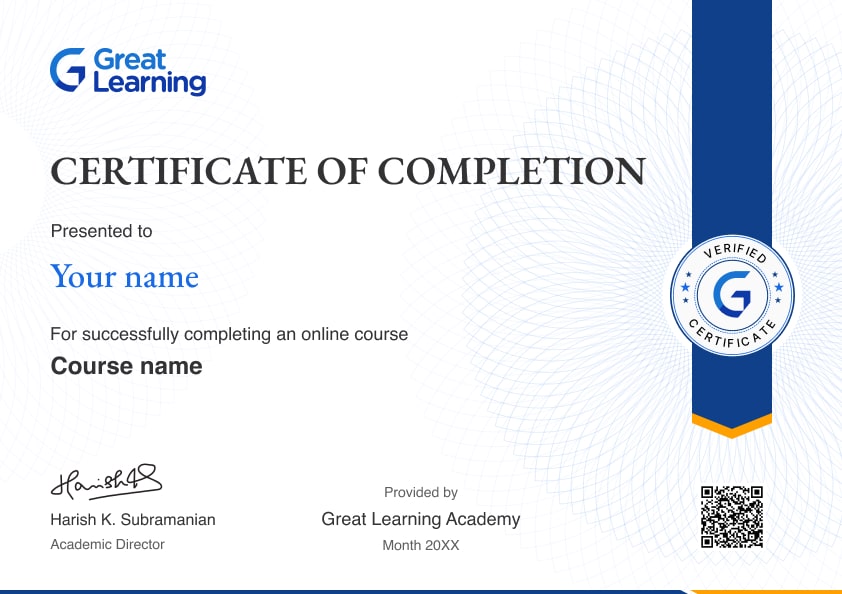
Earn a certificate & get recognized
Basics of Scrum
 4.63
Beginner level
0.75 learning hr
4.63
Beginner level
0.75 learning hr
Enroll in this free Basics of Scrum Course taught by experts. Learn today about Scrum Principle, Process, roles and more. Start today and improve your knowledge and skills to be industry-ready!




About this course
Scrum is a project management framework that has gained popularity in recent years, especially in software development. A free course on the basics of Scrum is available to help beginners learn about Agile and Scrum principles, the Scrum process, roles, events, and artifacts.
The course starts with an introduction to Agile, which is the foundation of Scrum. It then delves into Scrum principles that emphasize collaboration, flexibility, and continuous improvement. Learners will also discover how Scrum helps teams to deliver quality products that meet customer needs. The course covers the Scrum process, which consists of Sprint Planning, Daily Scrum, Sprint Review, and Sprint Retrospective. Learners will also learn about the different Scrum roles, including the Product Owner, the Scrum Master, and the Development Team. These roles contribute to the success of the project.
Furthermore, the course covers Scrum events and artifacts. Scrum events refer to meetings and ceremonies that take place during the Scrum process. Scrum artifacts are the documents and deliverables that the team produces during the project. In summary, this free course is an excellent starting point for beginners who want to learn about Scrum. By the end of the course, learners will understand Scrum and how it can help teams deliver quality products more efficiently and effectively.
Course outline
Get access to the complete curriculum once you enroll in the course
 4.63
4.63






 India
India

 India
India
 India
India
 India
India
 India
India
 India
India
 India
India
 India
India
 India
India
Frequently Asked Questions
Will I receive a certificate upon completing this free course?
Is this course free?
What are the prerequisites required to learn Basics of Scrum course?
You do not need any prior knowledge except knowing what Scrum is to learn this Basics of Scrum Course.
How long does it take to complete this free Basics of Scrum course?
Basics of Scrum Course is a 0.5 hour long course but it is self-paced. Once you enroll, you can take your own time to complete the course.
Will I have lifetime access to the free course?
Yes, once you enroll in the course, you will have lifetime access to any of the Great Learning Academy’s free courses. You can login and learn whenever you want to.
Will I get a certificate after completing this Basics of Scrum free course?
Yes, you will get a certificate of completion after completing all the modules and cracking the assessment.
How much does this Basics of Scrum Course cost?
It is an entirely free course from Great Learning Academy. Anyone interested in learning Basics of Scrum can start this course.
Is there any limit on how many times I can take this free course?
Once you enroll in the Basics of Scrum course, you have lifetime access to it. So, you can log in anytime and learn it for free online.
Who is eligible to take this Introduction to Basics of Scrum Course course?
You do not need any prerequisites to learn the course, so enroll today and learn it for free online.
Become a Skilled Professional with Pro Courses
Gain work-ready skills with guided projects, top faculty and AI tools, all at an affordable price.
 PRO
PRO






 (1).jpg)
.jpg)



.png)
.png)
.png)


.png)
.jpg)

.jpg)
.png)
.jpg)
.jpeg)






.png)
.png)
.png)
.png)
.png)
.jpg)
.jpg)
.png)

.png)
.png)


 (1).png)

.jpg)
.png)
.png)
.png)
.png)

.png)

.png)
.png)
.png)
.png)

.png)
.png)

.png)


Recommended Free Software courses
 FREE
FREE

 FREE
FREE
 FREE
FREE
 FREE
FREE

Similar courses you might like
FREE
 FREE
FREE
 FREE
FREE
 FREE
FREE

Relevant Career Paths >
Other IT & Software tutorials for you
Scrum Basics Course
Scrum is a project management framework that emphasizes collaboration, teamwork, and flexibility in delivering high-quality products. It is a popular methodology used in software development and other fields where complex projects need to be completed efficiently and effectively.
Scrum is based on the principles of Agile, a philosophy that values individuals and interactions over processes and tools, working software over comprehensive documentation, customer collaboration over contract negotiation, and responding to change over following a plan. These principles encourage flexibility, adaptability, and continuous improvement, which are essential for delivering high-quality products that meet the needs of the customers.
The Scrum framework consists of three main roles: the Product Owner, the Scrum Master, and the Development Team. The Product Owner is responsible for defining the product vision, prioritizing the product backlog, and ensuring that the team is working on the most valuable features. The Scrum Master is responsible for facilitating the Scrum process, removing any impediments that may prevent the team from delivering the product, and helping the team to continuously improve. The Development Team is responsible for delivering the product increment, which is a potentially shippable product that adds value to the customer.
Scrum also has four main ceremonies: Sprint Planning, Daily Scrum, Sprint Review, and Sprint Retrospective. Sprint Planning is where the team meets to plan the work for the upcoming Sprint, which is a time-boxed period of usually 1-4 weeks where the team works on delivering the product increment. During the Daily Scrum, which is a daily meeting of 15 minutes or less, the team updates each other on their progress, identifies any obstacles, and plans for the day ahead. The Sprint Review is where the team presents the product increment to the stakeholders and receives feedback on the product. The Sprint Retrospective is where the team reflects on their performance during the Sprint and identifies areas for improvement.
The Scrum framework also includes several artifacts, such as the Product Backlog, Sprint Backlog, and the Increment. The Product Backlog is a prioritized list of features, enhancements, and bugs that need to be implemented in the product. The Sprint Backlog is a list of items from the Product Backlog that the team commits to delivering during the Sprint. The Increment is the sum of all the completed Product Backlog items at the end of the Sprint.
Scrum offers several benefits to teams and organizations. First, it encourages collaboration, teamwork, and communication, which helps to ensure that everyone is working towards the same goal. Second, it promotes flexibility and adaptability, which allows teams to respond quickly to changing customer needs or market conditions. Third, it focuses on delivering high-quality products that meet the needs of the customers, which leads to higher customer satisfaction and increased revenue. Fourth, it provides a framework for continuous improvement, which helps teams to identify areas for improvement and implement changes to improve their performance.
In conclusion, Scrum is a powerful framework for delivering high-quality products through collaboration, flexibility, and continuous improvement. It provides a structured approach to project management that encourages teamwork, communication, and customer collaboration, and it has proven to be effective in a wide range of industries. Whether you are a software development team, a marketing team, or a product development team, Scrum can help you to deliver products that meet the needs of your customers and exceed their expectations.